Online Personal Training
How it works, what's included & how to get started.
A personalised coaching system built for busy professionals with demanding careers. We replace ‘all-or-nothing’ bursts with a strategy that compounds over time.
Designed for high achievers who’ve realised more effort alone isn’t the answer.
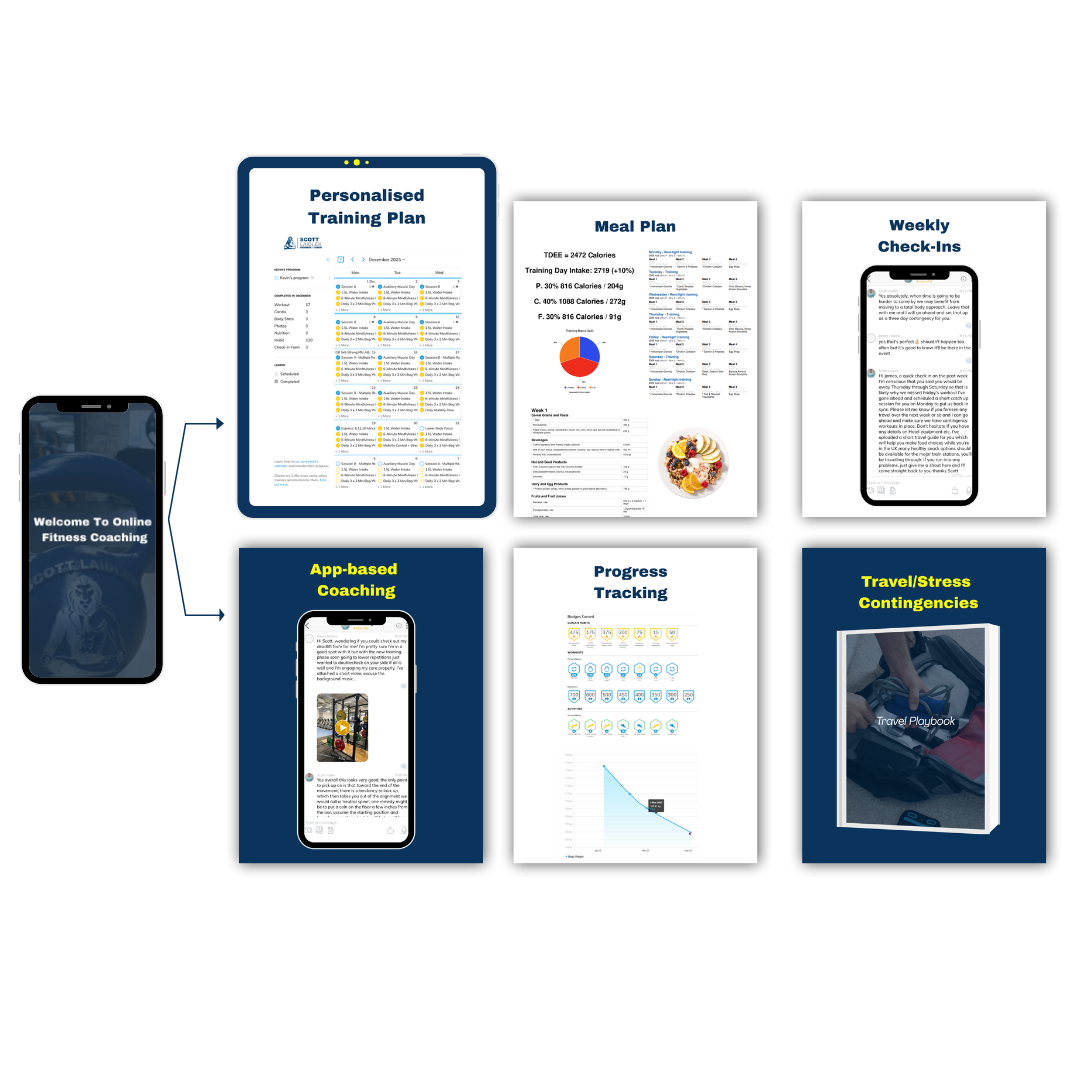
Included:
- Personalised training plan for gym or home
- Nutrition targets and meal plan
- Weekly check-ins & plan updates
- App-based coaching feedback via instant message
- Travel/stress contingencies built in
- Progress tracking and accountability system
As featured in:

You've succeeded at everything else. Why is fitness a sticking point?
If you've built a successful career but can't make fitness stick, you're not lacking discipline; you're using the wrong operating system.
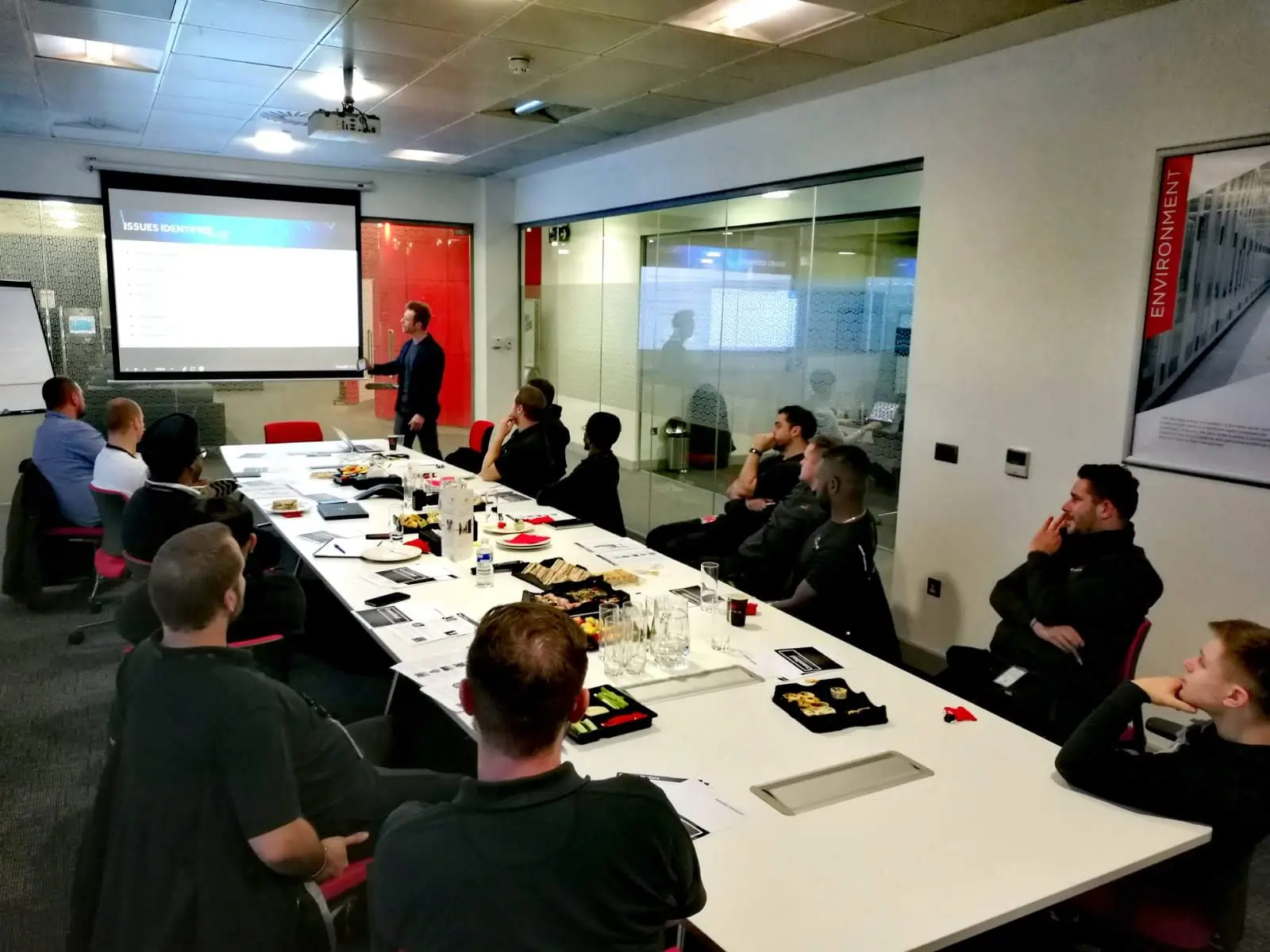
With 15 years of experience in personal training, working with professionals in law, finance, medicine, and entrepreneurship across 54 countries, I’ve seen a persistent pattern: high achievers fail at fitness not despite their discipline, but often because of it.
It creates a frustrating paradox. The solution to your fitness challenges keeps eluding you, acting like a mental tap left dripping, quietly draining your energy and clarity, and forcing you to ask: ‘Shouldn’t it be as simple as working hard?’
While that makes sense, there’s a brutal irony I’ve seen in myself and in almost every client I work with: The very traits that built your career, working harder when things stall, pushing through fatigue, believing more effort equals better results, actively sabotage fitness progress when applied without respecting physiological constraints.
I specialise in solving this specific problem: building sustainable fitness systems for professionals who’ve mastered their careers but, until now, haven’t quite cracked fitness.
Here's how the logic that serves you professionally backfires in your body:
In your career: More hours → More output → More success
In fitness: More training → Less recovery → Worse results (past a threshold)
In your career: Pushing through fatigue → Proves commitment → Gets rewarded
In fitness: Pushing through fatigue → Accumulates stress → Produces burnout/injury forcing a lay-off
In your career: Obstacles are meant to be powered through
In fitness: Obstacles (pain, exhaustion, life chaos) are signals to adjust (pull back, planned recovery)
This isn't theory. It's an operational shift proven in high-performing careers.
Tom, USA, Co-Founder & Former Wall Street Trader
Jim, USA, Exec VP/Secy/Gen Counsel
So the very traits that have made you successful – discipline, work ethic, pain tolerance, and refusal to quit become liabilities when applied without understanding the system’s actual constraints. In health & fitness, you’re optimising for the wrong variable.
This is why driven professionals often see worse results than people with less discipline. They’re bringing career logic to a physiological system that operates differently. More effort doesn’t equal better results; well-placed, strategic effort does. When you apply that same work ethic to a system built for your body, your results compound instead of collapsing.
You don’t need more discipline. You need a better fitness strategy.
This isn't really a fitness problem
Your previous attempts weren't built for your lifestyle.
For busy people, fitness programs do not fail because they are ineffective. They fail because they rarely account for the schedule pressure, stress, travel, and recovery demands of a life that does not revolve around working out.
The result is sound methodology on paper, but no coherent system. No way for training, nutrition, stress, and recovery to work together from week to week.
Many fitness coaches design for an “ideal individual” because that mirrors their own reality. Those plans can work well for them, but not for you, because you do not have the bandwidth required to implement them consistently.
When a fitness attempt breaks down, it is easy to blame discipline, accountability, or motivation. In my experience with high-performing professionals, that is rarely the issue. The problem is design. If a program is built for a lifestyle you do not lead, you will not sustain it.
What typically follows is a familiar cycle:
- Effort produces poor returns, even for highly driven people
- Fitness is deprioritised in favour of areas with better feedback loops
- Health and performance deteriorate until another attempt begins
- The all-or-nothing cycle persists for years, sometimes decades
People who stay in shape year-round are not inherently more disciplined or motivated. They are using a different structure, one built within real-world constraints, not in opposition to them.
Effective systems do not demand more time or willpower. They start by understanding where time and energy actually go, then optimise for that reality. They do not chase peak conditioning; they deliver steady, sustainable progress, offering fitness results that compound, even when weeks are chaotic.
That is what I build for my clients with my online personal training service: Personalised fitness plans designed for your actual life, not someone else’s ideal conditions.
You already know the pattern
A start-stop relationship with exercise, and results that don't last.
You are consistent for weeks—training regularly, preparing meals, making progress. Then life becomes chaotic. Work demands increase. Travel disrupts routine. Fitness drops down the priority list.
You return with good intentions but feel behind. So you push harder—more sessions, stricter dieting, less rest. It works briefly, until fatigue or life intervenes again, forcing a break and putting you back at square one.
This is not a discipline problem. It is a systems problem.
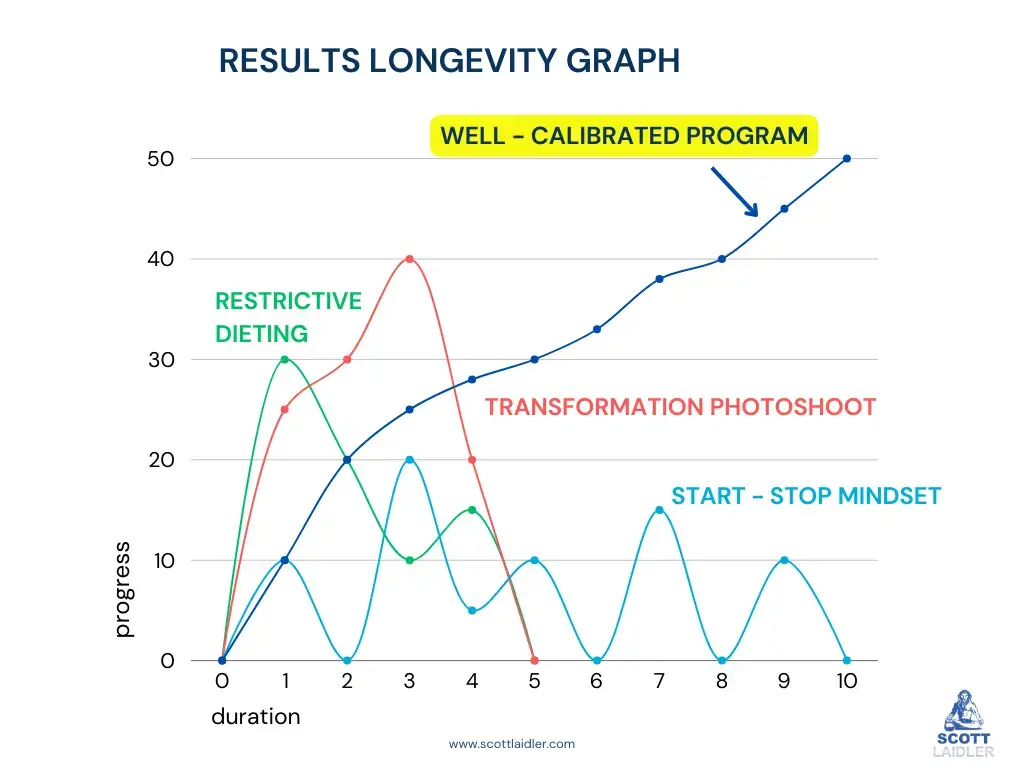
Look at the graph. The green, red and light blue lines represent the ‘Push Hard / Crash’ cycle. It’s easy to treat your body like a machine that can be red-lined indefinitely. But physiology doesn’t work that way. Increased effort without recovery simply accumulates fatigue, which commonly leads to a crash.
The Dark Blue line represents our goal: A system designed for process and sustainability, not heroics.
For busy professionals seeking results that actually last, sustainability is not optional; it is essential. The issue is that almost every fitness program you have tried was built for short-term peaks, not a sustainable baseline.
Most fitness programs are built for a ‘peak’. Busy professionals need a baseline
What happens after the event, photoshoot or ‘12-week transformation’ ends?
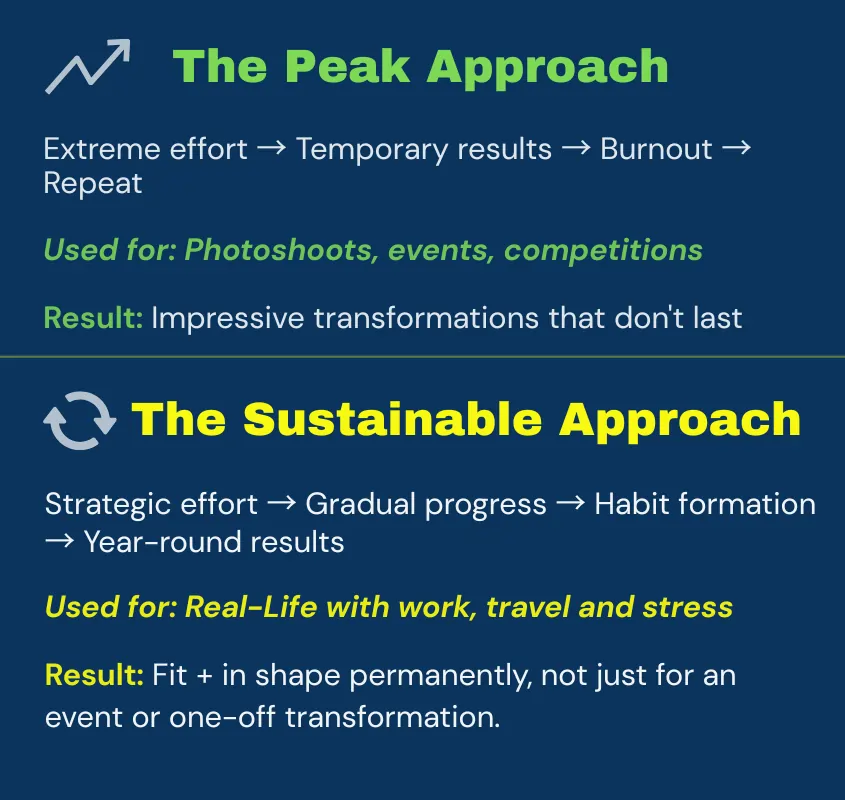
Most fitness programs aren’t wrong. They’re just unfinished. They’re designed to deliver a peak: drop body fat, reduce carbs, tighten discipline, and sprint toward a deadline. The results are real. But a deadline doesn’t come with a plan for the day after.
You can see it in classic weight-loss groups and endurance programs alike. The entire methodology is built around reaching a number on the scale or a finish line on a course. Once you hit it, the system collapses: calories are either too high or low for everyday life, weigh-ins or mileage are still driving your behaviour, and the moment normality resumes, progress rebounds. Physically, you’re often lighter but weaker; psychologically, that small rebound triggers panic, and the old patterns rush back in.
In other words, these approaches are optimised for a single peak condition, not for a strong, confident baseline, where you’re at a weight you’re happy with, and you feel just as capable in your body on New Year’s Day as you do two weeks out from a holiday.
Nothing was fixed. It was paused.
This is also true of modern body transformations. Twelve perfect weeks and a photoshoot prove you can suffer your way to a peak, commendable, and I’ve done it myself. But suffering your way to a peak doesn’t build you a lifestyle. Being in photoshoot shape for a day won’t solve the problem of staying fit, strong, and confident while living a real life in tech, medicine, law, and entrepreneurship like the majority of my clients.
Transformation programs work. They just don’t last.
A sustainable solution needs an operating system, not a finish line.
Peaks are fine, as long as you know what's next.
There’s nothing wrong with testing just how lean, strong, or defined you can get. But what it takes to reach a peak is very different from what it takes to live there.
Look at the people you’re encouraged to emulate: bodybuilders peak for a few shows a year. Instagram models arrive at photoshoots tanned, dehydrated, and pumped for a single perfect moment. Hollywood actors have trainers, dieticians, chefs, and often train twice a day. YouTubers batch-shoot content in peak condition. Athletes spend weeks in pre-season camps.
There’s nothing wrong with seeing how lean, strong, or defined you can get. The issue is that what it takes to reach a peak is very different from what it takes to live there.
Peaks are only sustainable when:
You know exactly when the recovery window is coming
Sleep, food, and training volume can be controlled for a period
Life can temporarily be organised around the goal
But most busy professionals are doing the opposite:
Long weeks, high responsibility, frequent disruption
Variable sleep and stress levels
Limited time and recovery capacity
So you end up using temporary methods with permanent expectations, and that mismatch is what drives the start–stop cycle.
Ultimately, you have to choose, and that’s okay. A peak has a drop-off on either side. My work is about establishing the baseline you live at for the other 50 weeks of the year, so your results hold when life gets busy.
Why the best fitness advice can fail in a busy life
The advice isn't "wrong", it's just wrong for you.
Here’s a common irony: Professionals in their 40s and 50s who lead teams, oversee mergers, and make life-changing decisions often find themselves copying the fitness routine of a 20-year-old influencer whose full-time job is staying in shape.
That influencer may have far fewer competing demands, far more control over sleep and food, and significantly more recovery capacity. You are operating in the real world. Copying their roadmap when your reality is completely different, physiologically and logistically, isn’t discipline; it’s incompatibility.
The Aesthetic Blindspot
For a young trainer, their physique is often their business card. Without a long track record of client results, they have to double down on their own aesthetics to prove they know what they’re doing. They also tend to love the whole process of training, dieting and recovery, its why they work in fitness.
I say this without judgment because 15 years ago, my physique was the only credential I had. Before I had 10,000 coaching hours, simply being in shape was necessary to get in the room. It’s a natural phase of a trainer’s career. But if you’re over 30 with a demanding career that’s not the phase you should be hiring for.
What you need to see is a track record of repeatedly building results inside real constraints for dozens of people with a similar reality to you.
Otherwise, you can end up following an excellent map for the wrong territory.

Elite sport peaks for race day. Your life has no off season

Many workout plans take their cues from athletes, applying what works in competition to the gym. But elite sport is governed by different principles. Under examination, the trade-offs are explicit.
Bodybuilding is a peaking sport. It optimises for maximum results on a specific date (for a show, a photoshoot etc). That can be appropriate when you can plan your training, nutrition, recovery, and downtime around the peak.
Health and fitness require a baseline. If your workload, travel, sleep and stress are variable, the goal is not a perfect peak; you need to establish equilibrium.
Likewise, an athlete might compete through pain or injury risk to reach a final. They are ‘borrowing’ from the immediate best interest of their physiology to pay for a moment of glory.
Fitness results are won in the aggregate. No single workout is worth risking a significant setback.
Applying title-fight intensity to a Tuesday morning session before a board meeting is not athletic thinking. It is operational risk with no meaningful upside.
That is why we borrow selectively from sport: periodisation, active recovery, process-driven training, and an understanding of what focused commitment can achieve. What we do not do is copy an athlete’s exact protocols and impose them on a 60-hour work week. In your context, those principles must be re-designed, not blindly replicated.
So we borrow the best ideas from sport: periodisation, active recovery, process-driven training, and the inspiration of what’s possible with commitment and focused work. We just don’t copy an athlete’s exact protocols and paste them onto a 60-hour work week. In your context, those same methods need reimagining for your context, not replicating.
The smart play
While others stake their future on today’s conditioning, you are balancing current performance with the health required for the next three decades—for your family, your career, and everything you still want to achieve.
If you are ever called into a real-world emergency, you need to be ready, not sidelined or feeling past your best due to unnecessary gym heroics. You don’t need hype, you need strategy. From an experienced coach who understands how to help you pursue your fitness goals without dropping the multiple plates you are already spinning.
How the mismatch plays out in real-life
Not a character flaw, a design flaw
These are common outcomes when fitness is built for ideal conditions, not real schedules. Broad patterns, not rules if you recognise yourself on either side, you’re in the right place
- Repeated attempts to get lean strip away muscle. The result is 'soft and flat' instead of defined.
- Bulking to fix it just adds body fat. Abs disappear, and conditioning drops.
- Self-correction becomes extreme: fasting, two-a-days, punishing cardio. Burnout follows.
- DIY plans pull in different directions. Conflicting opinions create uncertainty, which erodes motivation.
- Exercise and healthy eating are meant to be self-care, but rigid plans add pressure instead of reducing it.
- Bodybuilding-style programs ignore intuition and disconnect you from your body.
- Yoga or Pilates feel calmer, but on their own they do not drive the shape-change you want.
- Social media amplifies comparison. Perfection is rewarded. Real life doesn't fit the model.
A single framework that improves muscle, conditioning, and fat loss at the same time. One plan, one direction, no boom-bust cycle.
A flexible approach to health and fitness designed for real life, where the goal is consistency and intuition, not robotic perfection.
What works instead is simple: a plan designed to keep you at roughly 80% conditioning year-round. So that results compound without requiring perfect weeks.
The 80% advantage
Stay within striking distance of your peak—without living like your life is one long training camp
This is the ultimate proposition because at 80% of peak condition, you’re lean, strong, fully fuelled and capable, all while sitting about 4-8 weeks from being in the shape of your life or tackling almost any major fitness challenge with a shift of focus. This way you get all of the practical benefits of being fit and in shape, without trading in presence, time, energy or long-term health on the final 20% which is the realm of restriction, risk and unsustainability.
80% conditioning from 80% adherence is the superior goal.
My online personal training service is built to deliver on this equation. In my experience, most busy people can sustain this, and unforeseen circumstances can knock a few sessions off the calendar each month, without collapsing the system or undermining the result.
At this level, there’s no trade-off. The habits that get you in shape also make you feel good because there is no need to be rigid or restrictive. They’re not competing goals; they’re the same system.
The training intensity that maintains your conditioning also builds your capacity and preserves your joints, so you’re still athletic in your 40s, 50s, and beyond.
Simultaneously, the nutrition approach that keeps you lean stabilises your energy and sleep. You aren’t fighting hunger or constantly thinking about food. The recovery capacity you’ve built into your schedule helps prevent burnout and enhances performance, so you’re not dragging through workouts or losing presence at work.
You’ll look great at the beach. You’ll have energy for your work and family. You can still play sports, go hiking, and do the activities you enjoy. You wake rested and ready to face the day. You’ve removed all of the operational downside.

Crucially, this approach will be maintainable year-round because it’s not accruing fatigue. No depletion. No psychological exhaustion. The system sustains itself because it keeps you at equilibrium.
And it doesn’t require perfect adherence. It’s built on systems that work at 80% compliance, so no single missed workout, or day’s meal planning ever represents a failure; it’s all accounted for before you even begin.
Think of it as keeping a reserve tank. You’re not running on fumes, and you’re not maxed out. If you want to dial things in for an event, be it a holiday, wedding, or competition, you have the metabolic and psychological capacity to push the line without breaking, achieve your peak and then return smoothly to baseline.
The trade-off only reappears if you try to live at 100%. That’s when you begin borrowing from energy, recovery, and vitality to chase a look that only functions under narrow conditions.
A start–stop relationship with fitness has never solved anyone’s frustration. It creates cycles of depletion, rebound, and discouragement.
Sheer force can’t be sustained. You push, you crash, then spend months trying to claw back to baseline; it’s why so many people never seem to solve their fitness frustrations.
What maintaining 80% means for you
What does a maintainable baseline look and feel like?
You’re simply in consistently good shape, capable, not obsessed.
For most people, true 80% conditioning is superior to anything they’ve ever previously sustained.
The final 20% remains optional, but is not a requirement. You’ve already won the game that actually matters: fitness that fits your life, not the other way around.
- Physically: Lean enough to see definition, strong enough to perform but not exhausted from overtraining.
- Mentally: Confident in how you look, without scrutinising every calorie at a family meal.
- Socially: Relaxed enough to enjoy spontaneity during dinner plans, holidays and weekends, without anxiety about 'ruining' your progress.
- Practically: Missed sessions don’t break the system. Your plan has enough flexibility and momentum to keep moving forward
This is what my online personal training is built to deliver: a level of fitness you can hold year-round, even when work and life get unpredictable.
Beyond aesthetics: strength, performance, and longevity
For many clients, looking good becomes a byproduct, not the primary objective

As life becomes fuller, training needs to do more than change how you look. It must protect your energy, preserve capability, and hold up under real-world stress: work, travel, family life, and the realities of your forties and fifties.
Leanness and muscle definition still follow. Over time, however, most people care more about what their body can do, how it feels, and how reliably it performs from week to week.
Lower body fat, strength, and muscle preservation are natural outcomes of a healthy, balanced training system. As the years progress, it is normal for aesthetics to matter less than what your body remains capable of.
- Capacity for the activities that matter: Hiking, running, cycling, skiing or simply keeping up with your children.
- Protection against age-related decline: Maintaining muscle mass, bone density and metabolic health.
- Healthspan, not just lifespan: Staying active, independent and confident as you age.
- Resilience under stress: Physical and mental capacity when life demands more from you.
You don’t have to want visible abs or a photoshoot peak. Many of my clients care more about being consistently strong, capable, and ready, whether that’s a good golf game, a long hike, or knowing they can run a 10K on short notice.
In my online personal training, we decide which outcome sits at the top of the brief. Physique, performance, or a blend. Then I’ll build the plan to deliver that result within the constraints of your real life.
Hard work pays off, once you create space for it
Here’s what hustle culture misses: Recovery is the rate-limiting factor on your results, not effort. Physiology works the same way every time: the work is the stimulus; recovery is where adaptation happens.
A workout isn’t a result in itself. The goal isn’t to make you sweat, burn calories, or chase intensity. It’s a request for adaptation — whether that means building muscle, gaining strength, improving cardiovascular capacity, or losing fat. If you send the right requests consistently enough, you get the outcome.
But that only works if your nutrition matches your training demand, and if stress and sleep are kept within a manageable threshold. Without those foundations, increasing effort just overwhelms a compromised system. It’s pouring water into a bucket with holes in it. More input exacerbates problems, not results.

To be clear: this isn’t about avoiding hard work. It’s about arranging conditions so your effort produces adaptation instead of accumulating stress.
The opportunity is that when you understand fitness as a connected system, whether you’ll get results or not becomes predictable.
Small, coordinated improvements across a few key areas compound. Even marginal changes create meaningful progress.
Without a coherent strategy driving their efforts, many find themselves in endless cycles of researching the best exercises, programs, supplements and diets, but that’s the 20% of fine-tuning that you never actually get to benefit from because the fundamentals were missing. It’s like spending years finding the perfect fuel for a car with no engine.
Strategic activity, not less activity. This doesn’t mean cutting out activities that genuinely serve you. Many of my clients run for mental clarity, cycle for stress management, or train with intensity because it makes them feel alive.
That’s different from adding volume because you think you should, or pushing exhaustion because you’re afraid to break a perfect streak. The goal isn’t less activity, it’s about supporting and fully recovering from the right activity. I build your program around what matters to you, then optimise everything else to support it.
Recovery doesn’t distract from the work; it enables the work.
The counter-intuitive truths you learn after the "obvious" ways fail.
Magazines and influencers sell soundbites. I build systems. Here's why common sense fitness advice often backfires when you're busy, stressed and running at capacity.
If you’ve already done the “eat less, move more” loop enough times without getting the outcome you expected, you’ve already larened the hard part, the human body doesn’t behave like a simple equation under load.
If the maths were that linear, why isn’t your marathon time just 26.2 x your fastest mile?
As fatigue rises, the system changes. The same is true with exercise, nutrition, sleep-debt and stress. Push past certain thresholds and the “obvious” inputs stop producing the obvious outputs.
Here's the Problem: Common sense assumes linear cause-and-effect
When you assume simple relationships that don’t always exist, you end up optimising the wrong variable, then wondering why more effort produces worse results. This is exactly what I account for in my online personal training service.
The Calorie Paradox
The Obvious: If I’m not losing weight, I need to eat fewer calories
The Reality: Fewer calories can actually halt fat loss
The Shift: When calories drop too far for too long, training quality falls, daily movement often drops, cravings rise, sleep can worsen, and recovery suffers. You don’t need “more discipline”, you need an intake you can execute consistently while still performing like an adult with a real life.
The Frequency Paradox
The Obvious: To get better results, I need to train more often, 6-7x week is ideal
The Reality: Many busy professionals get better results training less, but training better.
The Shift: Driven people often treat exercise like a P&L sheet, assuming more input equals more output. But more training means greater recovery debt. When you’re managing work stress, irregular sleep, and competing demands, 6-7 sessions per week is often an unrecoverable burden and feeds the start/stop cycle. 3-4 quality sessions typically outperform daily workouts with diluted focus because it gives your muscle tissue time to repair.
The Scale Trap
The Obvious: Success means a lower number on the scale
The Reality: Scale weight alone doesn’t solve the problem
The Shift: Crash diets or external mechanisms might make you lighter, but they don’t fix the behaviour that put you in a position to consider them your best option. Building a system that keeps you lean whilst protecting muscle mass and bone density is a different skill than chasing a number on a scale.
The Load Fallacy
The Obvious: I need to lift as heavy as possible to gain muscle
The Reality: Your muscles respond to tension, not ego
The Shift: Muscle growth comes from progressive tension and recovery, not just heavy loads. Lifting lighter weights with better form, full range of motion, quality contraction and proper programming often produces better results than simply going into every session and lifting as much as you can; that’s a demonstration of what you can do today, not an investment in what you’ll be able to do tomorrow.
Your goal is real. Your motivation runs deeper.
Why hitting a benchmark doesn’t always satisfy the drive
Most fitness advice treats your stated goal at face value: lose weight, build muscle, improve performance. But for high-performing people, that goal is often the visible proxy for something deeper, be that control, confidence, energy, identity, or simply feeling like yourself again.
That’s why “just follow the plan” often fails. If the program doesn’t account for the real driver underneath the goal, you can hit the benchmark and still feel unsatisfied or burn out trying to maintain it.

What this changes in practice:
A lower number on the scale doesn’t automatically fix your relationship with food or control—maintenance can become the new obsession.
Perfect execution doesn’t cure perfectionism; it often trains you to raise the standard again.
Looking better can boost confidence, but confidence that lasts comes from keeping promises to yourself, not from chasing a fragile peak.
How my online personal training accounts for this:
In your consultation, we don’t just choose a goal to pursue; we identify the reason you care about achieving it and build the system around it:
-
A plan you can execute under real pressure (work, travel, stress), not in ideal conditions
-
A maintainable baseline (your “80%”) so progress compounds without burnout
-
Clear process targets so you build trust in yourself week to week, not just hope for outcomes
If you want a training and nutrition strategy that fits the real driver, not just the stated goal, book a 1:1 consultation.
The Hidden Mechanism: Why stress dictates your training ROI
Two people can follow the exact same program and get completely different results.
Not because the plan changed, but because the state they bring to it changed.
When you’re well-rested, fuelled, and carrying low stress, training is an investment: your body has the resources to adapt.
When you’re running on sleep debt, overloaded, and under-recovered, the same session becomes a withdrawal: it costs more, delivers less, and takes longer to repay.
This is the part most programs ignore: your body responds to total load. This means training load plus work stress, poor sleep, travel, and emotional strain. When total load is high, your system becomes protective. It prioritises getting through today, not upgrading for tomorrow.
Under high stress you're more likely to:
- Struggle to progress your lifts
- Feel less powerful despite doing the same work
- Recover more slowly between sessions
- See plateaus despite consistent effort
The workout hasn’t changed, Your capacity to benefit from it has
This is why busy professionals often feel like they’re pushing harder and getting worse results. They’re stacking training stress on top of life stress, and the body can’t adapt under that combined load.
The solution isn’t “do less exercise.” It’s to create the conditions where exercise produces a return. Once sleep, recovery, nutrition, and training load are calibrated, you can push intensity without breaking down, and that’s where ambition becomes an asset again.
You need a strategist, not another program.
Outsource your fitness strategy to an experienced personal trainer who understands high pressure careers.
By now, you’ve seen why previous programs failed: they ignored your context, promised permanent results from temporary methods, and treated effort as the only variable that matters.
Designing a system that actually fits your life isn’t a knowledge problem, the information exists. It’s a systems design problem. But the theory is useless without logistics.
To build this yourself, you’d need to:
- Determine your recovery capacity (not generic averages)
- Identify which training variables matter most for your goal (and which are noise)
- Account for how stress, sleep, and travel change your response week to week
- Adjust volume and intensity so progress compounds instead of breaking you down
- Test and refine for months to see what works for you
That’s effectively a second job, on top of an already full workload. Most people don’t need more information. They need better decisions, made consistently.
You can spend it deciphering exercise science, or you can outsource the architecture and decision-making to me. My role is to design and adjust the system, your role is to execute the plan, then let the results compound. We'll build a structure that fits your actual life, then course-correct together as work, travel, or stress change the constraints. If you're ready to talk, you can book a 1:1 consultation. A short call where we map your constraints, goals and whether this approach is a good fit. If you'd like to see more before that, keep reading to see exactly how the process works:
How online personal training works:
Book a 1:1 consultation call to identify your bottleneck. We'll look at training history, calendar constraints and goals to find current blindspots in your approach.
I'll build the architecture. You get a fully integrated system: Training, nutrition and lifestyle habits to support recovery. Designed specifically for your week.
You execute a simple daily workflow in the fitness app, aiming for 80% adherence. I monitor your progress in the background and we course-correct in real-time.
The call is diagnostic, not a sales pitch. If I don’t think we’re a good fit or can’t improve on what you’re already doing, I’ll tell you.
What working together looks like:
Adaptive coaching, not static programming
Strategic Onboarding
After our consultation, you'll complete a detailed assessment covering training history, movement capacity, injury patterns, lifestyle factors, and goals. Within 3-5 days, you'll receive your custom program with comprehensive onboarding materials: exercise demonstrations, video playbooks, and progress tracking guides. We'll schedule an onboarding call to walk you through the entire program and address any questions. Expect calibration at this stage, as we may have introduced several new methods and habits to support your goals.
This Means: Zero guesswork from day one. You know exactly what to do and how to do it.
Weekly Implementation & Feedback
Typically, you'll train 3-4 times per week, with 30-45 minute sessions, tailored to your schedule and capacity. Log each session in the platform, where I review performance, recovery feedback, and any questions.
I check your training logs multiple times per week, not just during check-ins. When something needs adjusting it happens swiftly. Questions get answered within 24 hours (Mon-Fri). Submit videos of key movements for form review. Most technique problems can be resolved this way without needing a trainer next to you.
This Means: You train. I adjust. You don't drift off course.
Monthly Review
Progress requires novelty, in fitness, once your body adapts to a plan, results plateau. I review your progress monthly to determine when you'll most benefit from adaptation, often with a full rebuild of your workouts, whilst keeping foundational patterns we've built habits around.
This Means: No stagnation and no reinvention, just continuous progress.
Nutrition Planning (structure without rigidity)
We’ll set clear calorie and macronutrient targets based on your goals and schedule. I handle the strategy; the nutritionist I work with, Katie Turianytsia, turns that into a personalised meal structure that fits your preferences and real life. You’ll communicate with me as your single point of contact while I collaborate with Katie in the background so training and nutrition stay aligned. You can either follow the done-for-you meal plan or use our nutrition guidelines to hit the same targets in your own way, with your food logs reviewed for feedback. That gives you both structure and flexibility, instead of being dependent on a single rigid plan.
This Means: You learn how to make good food decisions in any scenario, not only when conditions are perfect.
Ambient Oversight
I review your training several times per week, not just monthly check-ins. Weekly reviews serve as fail-safes, but mid-week adjustments are common based on how your schedule changes, training performance, or unexpected life events.
This Means: You don't fall behind. The program adapts to keep you moving forward.
Expected results timeline:
Building a sustainable system follows a predictable progression (individual results vary):
Weeks 1–4 — Foundation
Routine becomes consistent. Training starts to feel simpler to initiate. Energy and sleep usually improve. The frustration of inconsistency begins to lift.
Weeks 5–12 — Development
Strength trends up. Clothes often start fitting differently. Confidence increases because the plan is working in your real life, not in theory.
Month 4+ — Integration
The system becomes automatic. You know how to train and eat without constant decision-making. Fitness stops feeling like a problem you’re “trying to solve” and becomes part of your normal operating rhythm.
In practice: You wake up, check the app, and your session is ready. You train 3–4× that week for 30–45 minutes without needing perfect execution. If travel hits, the programme adjusts. If life interrupts, we course-correct. Six months later, you’re in better shape than you were at 30—and it’s easier to maintain, not harder.
Most clients continue with me well beyond this point because a well-calibrated system without restriction or over-training becomes easier to maintain over time, not harder.

From the start, Scott provided a personalized macro-based meal plan that matched my lifestyle and goals. The workouts were challenging yet achievable, and the mobility sequences really helped with flexibility and injury prevention. Over 12 weeks, I lost about 10 pounds and saw major improvements in energy levels, strength gains, and clothing fit. I also gained noticeable muscle mass, especially in my arms and legs. What really set this program apart was the weekly check-ins through Scott's app. That accountability was exactly what I needed to stay consistent, especially during busy work weeks. Scott was always supportive and incredibly knowledgeable. He made sure to adjust the plan when needed, which made me feel like this wasn't a "one-size-fits-all" program it was truly built for me. If you're looking for a program that's results-driven, supportive, and sustainable, I highly recommend working with Scott. I feel stronger, leaner, and more in control of my health than ever before.
Most professionals who come to me have spent 2-5 years in the start-stop cycle. A few months of progress, then life gets busy and the system collapses.
This isn't just lost time, it's the accumulated stress of feeling behind, the erosion of confidence, and the long-term cost of repeating aggressive “start/stop” phases instead of building a baseline you can hold.
The question isn't whether to fix this. It's whether to fix it now or continue the cycle for another 2-3 years.
Client testimonials
The pattern you'll hear: Fewer rigid workouts & more food = better results
If you’re wondering whether this program can genuinely create lasting change, don’t just take my word for it. In this short video, you’ll hear directly from 15 of my clients. Professionals in their 30s to 60s who’ve balanced demanding careers, family obligations and personal setbacks, yet achieved results they once thought were out of reach.
A clear theme runs through each story. They have fewer rigid workouts, enjoy more outdoor activity and are eating more food, not less, than in past transformation attempts. That’s the result of a non-restrictive, sustainability-first approach. If I don’t think you could do it for a full year, I won’t include it in your plan. The outcomes speak for themselves. If you want a plan designed around your actual week, please book a 1:1 consultation
Craig S.
Real Results
“Scott delivers a program that is flexible and accommodating to your lifestyle and work commitments. He is always on hand to answer questions. I have more energy and feel 10 years younger!!”
Claire Louise Taylor
Confident & Happy
“It’s amazing what confidence can do to you and thanks to Scott Laidler online personal training I feel so much more confident and happy in myself, still got a lot to go but looking forward to doing another 6 weeks at it 😀💪🏼 Thanks!!”
Common client outcomes:
Individual results vary based on starting point, consistency, and life circumstances. These outcomes represent patterns commonly seen in my clients who exercise consistently and stay with coaching long-term.
Physical + Performance
Mindset + Lifestyle
- Leaner while eating enough to recover (often more than in previous dieting attempts)
- Strength increases in major movement patterns and everyday tasks
- Consistent energy throughout the workday
- Improved sleep quality and recovery markers (resting heart rate / HRV trends, where tracked)
- Reduced aches and pains from sedentary work and seated posture
- Consistency through travel and schedule disruptions
- Return to activities previously given up (hiking, sports, keeping up with kids)
- Reduced anxiety around food choices and social events
- Identity shift from “trying to get fit” to “someone who trains by default, even when life is busy
- Sustainable habits replace willpower
Who is this for?
This is for you if...
This won't be a good fit if...
- You're a professional working 40 hours or more, who is tired of the start-stop cycle and ready to solve fitness permanently
- You have exercise experience but previous attempts haven't stuck long-term
- You can commit to 3-4 efficient workouts per week
- You're at a stage where neglecting fitness has consequences you can feel: Lower energy, slower recovery, body fat harder to burn than it used to be
- You're done researching protocols and ready to outsource the strategy to someone who's solved this with hundreds of busy professionals
- You're looking for a shortcut, secret, or quick fix
- You need someone physically present to motivate you to exercise
- You want rigid bodybuilding style cutting and bulking cycles
- You're mainly focused on looking good for a specific event or deadline
- You want accountability for your old habits, rather than a strategy to build new ones
Case Studies:
Real clients. Real constraints. Results vary based on starting point, consistency, and life circumstances.
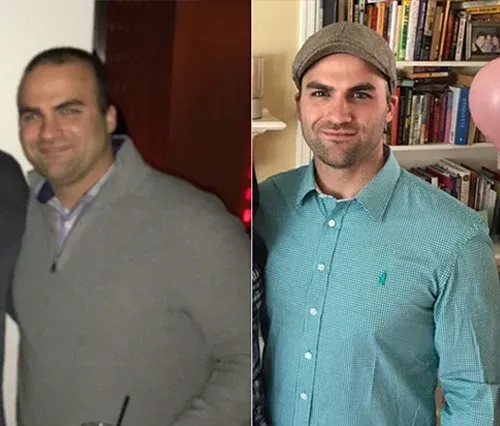
Dom, executive, USA.
When I started working as Dom’s remote fitness coach, he had a simple but powerful goal: To return to the weight where he felt at his best. He wanted to be confident and energised against, and secure in the knowledge that maintaining a healthy weight was back under his control.
Dom had gradually deprioritised fitness. The scale had slowly crept up, and energy levels had dropped. His usual routine no longer felt like it was serving him. But he was ready to do what it takes to make a change, but due to work constraints, he wasn’t in a position to completely overhaul his life to do it.
The foundation of his training program was built on efficient workouts that could be done anywhere, every workout covering a number of bases, calling on multiple exercise modalities. This helped because we knew, at times, workouts could get sporadic. We combined this with a flexible approach to nutrition, built on first principles rather than rigidity, so it supported progress even when eating out with clients.
Over the next eight months, Dom lost an impressive 49 pounds, without a trace of traditional dieting.
And because these changes were sustainable, the results have stuck. Dom didn’t just lose weight, he’s reclaimed control of his health, without sacrificing the career or lifestyle he’s worked so hard to build.
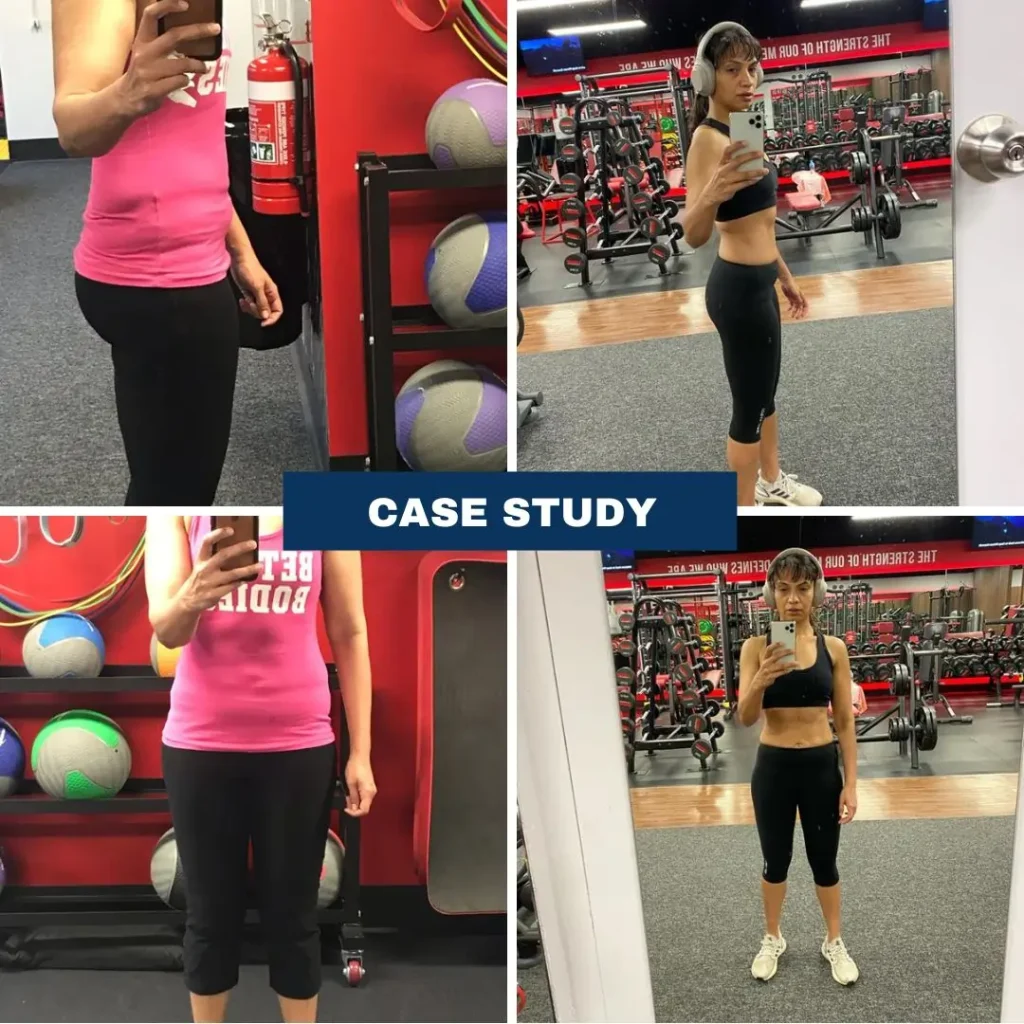
Minal, medical professional, AUS.
When Minal joined my online personal training service, she had a clear and time-bound goal: To fit back into her pre-pregnancy clothes by her 40th Birthday, just four months away.
As a medical professional, Minal’s lifestyle mirrored that of many of my clients: Demanding hours, high stress and limited time for exercise. She didn’t have the luxury of perfect conditions, so the approach had to be realistic, flexible and effective.
From the outset, we built a plan driven by strength training, with workouts that would flex between home and gym, based on her schedule. Every session was designed to deliver a maximum return in the minimum time.
We kept her calories consistently above 2,000. This fuelled both performance and recovery. And as you can see from her results, that strategy paid off.
Minal achieved her transformation without ever feeling deprived. She didn’t just hit her goal, she redefined what sustainable fitness looks like at 40.
Online Personal Training Prices
Custom training, nutrition oversight, and professional accountability.
$235
Billed Monthly. No Commitment, Cancel Anytime
$597
Billed Quarterly. 15% Discount on Monthly rate
You can pay monthly for maximum flexibility or commit to a full quarter upfront. The quarterly commitment removes decision fatigue around your next move, and billing aligns with the long-term focus of the work. This isn’t a discount for buying in bulk, it’s an incentive to commit to a timeline that actually produces transformation. Most of my clients continue for 12+ months because the system becomes easier to maintain over time, not harder.
- Custom training program (My own 28-step method, adjusted monthly)
- Nutrition guidance with Nutritionist Katie Turianytsia
- Real-time program adjustments (not monthly check-ins)
- Direct messaging support (24hr response, Mon-Fri)
- Weekly check-in as a consistent touchpoint
- Personal 1:1 onboarding call with Scott
- iOS/Android fitness app to track all progress and workouts
Note on capacity: To maintain the level of oversight promised here, I cap my private client base. I build every program myself and review your training data personally; nothing is passed off to junior staff. If the roster is full when you apply, I will add you to the priority waitlist for the next opening
Frequently asked questions:
Do I have to have a consultation before signing up?
Yes. The first step is a short consultation and brief application so we can confirm a good fit.
It’s intended as a diagnostic call, not a sales pitch. We map your constraints, training history, stress load and of course, fitness goals.
If we’re aligned, you typically move from application to a fully built fitness plan within 3-5 days.
How custom will my workout program be?
Your program is fully customised, built from proven training protocols, assembled and calibrated to you.
I use a 28-step programming framework I’ve developed over 15 years working with everyone from executives to Oscar-winning actors. It’s the same methodology I now teach to other coaches. These steps include: time per session, equipment available, travel schedule, preference, and recovery capacity.
But personalised doesn’t mean complicated. The customisation makes execution simpler, not harder, because everything is designed for your specific constraints from day one. Open the app, do the session, log it, done. Taking all friction and guesswork out of the process.
How does nutrition work? Do I need to follow a meal plan?
You’ll get clear nutrition frameworks and targets that fit your lifestyle.
We’ll set calorie and macronutrient targets that support your goals without dominating your life. When specialised support is needed, I collaborate with nutritionist Katie Turianytsia, who can build a personalised meal structure that fits your preferences and schedule. You still communicate through me as your single point of contact; behind the scenes, we ensure training and nutrition are pulling in the same direction.
There are three ways to track your nutrition:
1. We’ll design you a full meal plan – Total removal of guesswork, just follow the set plan and recipes and come in at 100% of your targets
2. We’ll build you a calorie target and macronutrient goals – You can then use our guidelines or your own meals to arrive as close to these targets as possible
3. Food Log feedback – If you’re really busy when you start your coaching, just track what you already eat. We’ll see how close to the ideal you get already, and we’ll make incremental changes over time without a wholesale overhaul of your food planning.
The strategy you select from the above is interchangeable. If you travel frequently, eat out often, or work irregular hours, your nutrition strategy adapts to that reality. Tracking can be useful initially for awareness, but it’s not required forever
What results can I expect from online personal training?
Most clients see noticeable body composition changes within 8-12 weeks, with results that continue to compound after that.
Typical early results include improved energy, strength gains, and clothes fitting better. But the real outcome is building a framework that works year-round, not just getting results as a one-off.
Unlike programs focused on maximum short-term change, we’re building the 80% conditioning you can maintain sustainably, which means staying lean, strong and capable without exhausting yourself or sacrificing your life.
Specific outcomes depend on your starting point, consistency, and goals. During our consultation, we’ll discuss realistic timelines based on your situation. Of course, results will depend on your current baseline, adherence to the program and the extend that you’re able to make changes to sleep/stress.
You can see a sample of the results our clients have achieved here
What if I travel or my schedule changes?
Life doesn’t have to be ‘perfect’ for this to work. The plan is built to flex around real life.
Business trips, holidays, late nights, kids’ commitments and busy seasons at work are all expected. I’ll adjust your training to match what’s realistic: hotel gyms, bodyweight-only sessions, reduced frequency, or maintenance blocks when needed. I’m able to make these changes for you at 24 hours’ notice Monday-Friday.
Most clients actually make better progress by starting when they are most motivated to make a change and learning to navigate these periods as they present, rather than waiting for a clear window that may never arrive.
We’re building a system that works in your actual life, not an idealised version of it.
Do I need a gym membership?
No, you don’t need a gym membership to join my online personal training program.
Your program will be built for you based on the exact fitness equipment you have available to you whether that is at home, a commercial gym or a combination of the two.
How will you deliver my fitness plan?
Your entire fitness program will be delivered through a streamlined, easy-to-use digital fitness app.
Once we complete your onboarding consultation and agree on a strategy, I’ll upload your custom workout plan, meal guidance, habit protocols and mobility sessions directly into your fitness app dashboard.
Here’s what you’ll have access to:
- Custom training sessions – with video demonstrations of exercises, coaching cues and progressions that adjust over time
- Nutrition guidance – including macronutrient targets and access to your personalised meal plan created for you by a certified nutritionist
- Progress tracking tools – Where we keep track of logged workouts and training metrics, where we keep on top of compliance and incremental progression
- Message-based accountability and weekly check-ins for strategic course corrections, not micro management, to help you stay on track.
You’ll be able to access your virtual fitness program from anywhere, so no matter whether your workouts take place in a home gym, commercial gym, or even while travelling. It’s everything you need in one place.
Think of it as having a personal fitness consultant in your pocket.
How will my coach know if I'm doing exercises correctly?
You can send form-check videos for feedback. I’ll send you feedback to help refine technique, adjust exercises, or provide alternatives if something doesn’t feel right. If an exercise causes discomfort, it’s replaced immediately.
How do I stay accountable without seeing a trainer in person?
You’ll have continuous communication instead of a weekly appointment. I see your completed workouts, nutrition logs, progress updates, and message you directly if you fall off track. This style of accountability is one of the top reasons busy professionals stick to the plan. It’s ambient oversight, not scheduled check-ins you have to plan and prepare for.
I get your point about efficiency, but I run for mental health, will you tell me to stop?
Not as a rule. If something genuinely serves you, we build around it. My job is to make sure the rest of your program supports your running rather than competes with it. Many clients run better after working with me because it becomes fully fuelled, recoverable, and we add mobility and strength work that adds to performance.
We just won’t pretend it’s the most linear route to fat loss, because that’s not its function.
What's the commitment? Can i cancel if it's not working?
Coaching is month-to-month with no long-term contract. Most clients stay for 12+ months because the system compounds, but you’re not locked in.
If within the first month you feel the program isn’t the right fit, we’ll discuss adjustments. My goal is to build a system that works for your life, if we can’t find that fit, I’d rather know early than have you continue out of obligation.
That said, sustainable results require time. Most clients see noticeable changes within 8-12 weeks, with the real transformation happening by month 4-6 when the system becomes automatic.
I've tried online coching before, how is this different?
Most online fitness coaching falls into two categories: cookie-cutter programs with minimal support, or high-touch coaching aimed at marginal performance gains that require perfect conditions to work.
My approach is different in three ways:
1. Systems design, not program delivery: I’m building you a fitness operating system, not just giving you workouts. The goal is decision removal and continuous adaptation, not following a static plan.
2. Real-time responsiveness: I review your training multiple times per week and adjust as needed, not just monthly check-ins when you’ve already been off-track for weeks.
3. Built for imperfect execution: The 80% conditioning approach means the system works when life gets chaotic, not just when conditions are ideal. Most programs fail because they require 100% adherence. This one compounds at 80%.
If your previous experience with online coaching felt like following a template or being left to figure things out on your own, this will be different.
You can view the methodology I use to deliver results to my clients, including my 37 rules of fitness.
Start your program with a 1:1 consultation
We'll discuss your personal fitness strategy on a video call
Online personal training reviews:
Ready to solve fitness for good?
Want to know more about who you’d be working with? Read more about my approach